
We’ve built our reputation in the Seattle metro on honest pricing, fast arrival, and repairs that actually last. Small noises and hesitation today are usually the warning signs of a bigger failure next month. Our technicians are background-checked, uniformed, and trained on every major brand and door type. We back our parts and labor with a warranty, because we stand behind the work.
Garage Door Spring Replacement
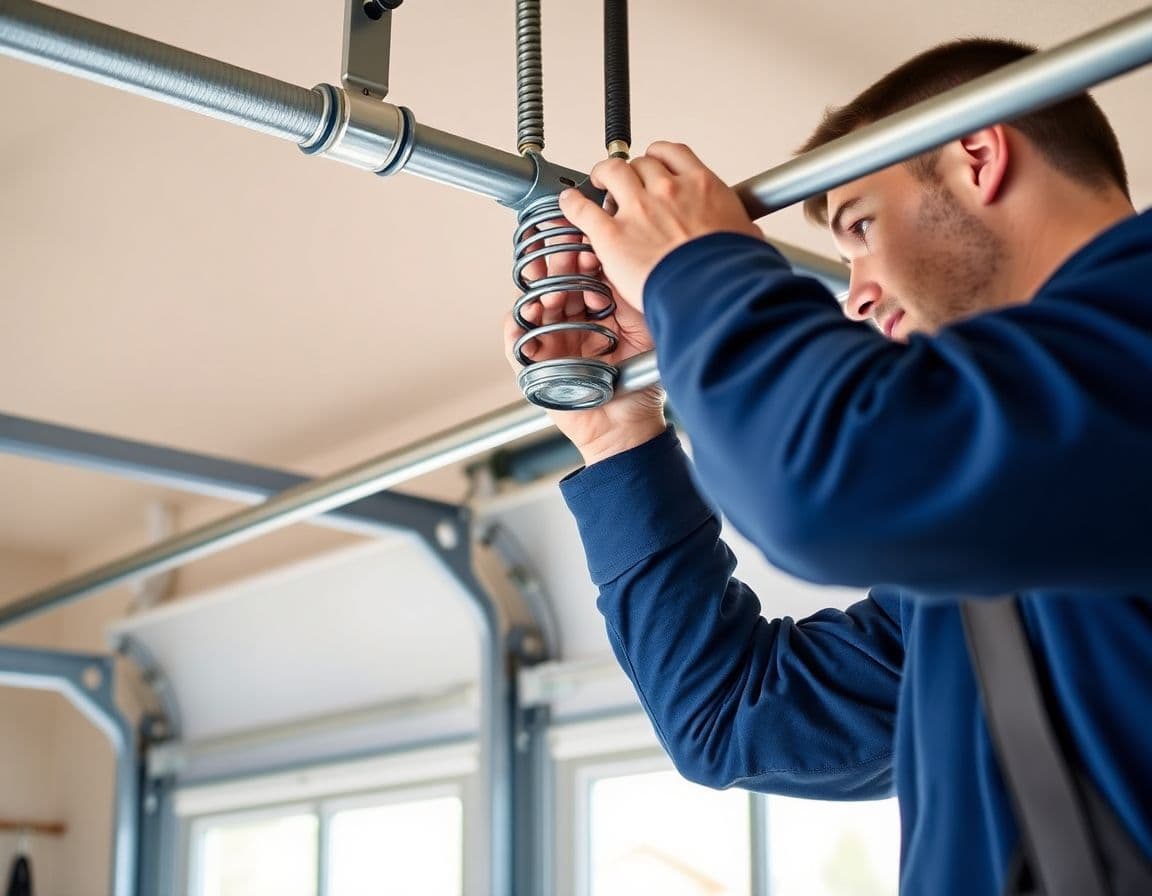
Broken springs are the #1 cause of a dead garage door. We replace torsion and extension springs with correctly-sized, high-cycle parts and re-balance the door for smooth, safe operation. A loud bang and a door that won’t lift usually means a broken spring. We carry torsion and extension springs on every truck and replace them safely — never a job to DIY.
Signs you need this service
A spring replacement job across the Seattle metro usually starts with one of these warning signs. If any of them sound familiar, it’s worth having a technician take a look before a small problem becomes a bigger, more expensive one.
- Loose or hanging cables alongside a failed spring
- The opener strains and the door only lifts crookedly
- A visible gap in the torsion spring above the door
- A loud “bang” from the garage, then the door won’t open
- The door opens a few inches then stops or feels extremely heavy
What causes it
Several things can lead to needing garage door spring replacement. Pinpointing the real cause — not just the symptom — is what keeps the repair from coming back. The most common causes we see are:
- Undersized or mismatched springs from a prior install
- Rust and Puget Sound moisture shortening spring life
- Normal wear — springs are rated for a set number of cycles
- Lack of lubrication and maintenance
Our Spring Replacement Process
We keep the process simple, transparent, and safe. Here is how a typical garage door spring replacement visit across the Seattle metro goes from the moment we arrive:
Measure & match
We measure wire size, inside diameter, and length to spec the exact spring your door needs for proper balance.
Safe, controlled replacement
Torsion springs store enormous energy. Our techs use the correct winding bars and procedure to replace them safely — something that causes serious injuries when attempted DIY.
High-cycle upgrade option
We offer high-cycle springs that last roughly twice as long, ideal for busy households that use the garage as a main entry.
Balance & test
We cycle and balance the door, fine-tune the opener force, and confirm the door holds at the halfway point.
We cycle the door several times and walk you through what we did and what to watch for.
Why Homeowners Choose 206 Garage Door
- Torsion & extension springs stocked on every truck
- High-cycle upgrade available for longer life
- We always replace springs in matched pairs when recommended
- Correctly-sized springs for true door balance
Pricing for garage door spring replacement typically runs $180–$450 (single or pair), and usually 60–90 minutes. You’ll see the full cost in writing before we begin, and we’ll never start work you didn’t approve.
Serving the Entire Puget Sound
From Seattle, Bellevue, and Tacoma to Everett and the Eastside, our technicians handle garage door spring replacement in more than 60 communities across King, Snohomish, Pierce, and Kitsap counties. Wherever you are, you get the same upfront pricing, warranty-backed parts, and same-day availability.
Because we run daily routes throughout the region, a technician is rarely far from your neighborhood. That local coverage is a big part of how we keep response times short — most spring replacement jobs are scheduled the same day you call, and genuine emergencies jump straight to the front of the line.
What to expect when you book
When you call for garage door spring replacement, we start by understanding what your door is doing so we arrive with the right parts. On site, we diagnose the whole system, show you the written price, and complete the work once you approve it. Before we leave, we test and balance the door and walk you through what we did — no jargon, no pressure.
We also use the visit to flag anything that’s starting to wear, so you can plan ahead instead of being caught out by a surprise breakdown. There’s no obligation attached — just an honest heads-up about what we see, which is the kind of service that earns long-term customers across the Puget Sound.
In Seattle and across King County, the cold, soggy stretch from November through March take a real toll on garage doors — springs and cables corrode faster, and dry rollers get noisy. That’s why we check the whole system, not just the part that failed, and recommend upgrades like sealed nylon rollers and fresh weather seals that hold up to our climate.
What Affects the Cost of Garage Door Spring Replacement
Several factors shape the final price, and we walk you through each one before any work begins.
When we quote garage door spring replacement in the Seattle metro, the price reflects what your door actually needs — not a one-size-fits-all number. The biggest factors we weigh are:
- The age and brand of your opener and door hardware
- The condition of the tracks, springs, and cables behind the obvious symptom
- The specific parts involved and whether premium or high-cycle components are a better value
- Whether it’s a standard appointment or a priority after-hours emergency
- The size and weight of your door (single vs. double, steel vs. solid wood)
- Whether related parts are worn and worth replacing in the same visit to avoid a second call
Whatever the job, you see the full cost in writing before we begin, and we’ll explain why each part matters. We’d rather help you make a smart decision than push the most expensive option.
Preventing Future Garage Door Problems
Keeping your door healthy is mostly about a few small habits and one professional check a year.
A few simple habits keep your door quiet, safe, and reliable for years — and they’re especially worthwhile given the moisture and temperature swings in the Seattle metro. Here’s what we recommend:
- Test the balance: disconnect the opener and lift the door halfway — a healthy door stays put
- Schedule a professional tune-up once a year (twice if the garage is your main entry)
- Listen for new sounds — grinding, popping, or rattling are early warnings worth acting on
- Keep the photo-eye sensor lenses clean and make sure nothing has bumped them out of alignment
- Visually check the cables and springs for fraying, gaps, or rust, but never adjust them yourself
- Lubricate the rollers, hinges, and springs a few times a year with a garage-door-specific lubricant (never WD-40)
Safety Comes First
Forcing a stuck, crooked, or broken-spring door is how minor problems turn into expensive — and dangerous — ones. Forcing a stuck, crooked, or broken-spring door is how minor problems turn into expensive — and dangerous — ones.
That’s why we never cut corners on high-tension parts like springs and cables, and why we always leave your door balanced and tested rather than simply patched. If you’re ever unsure whether it’s safe to keep using the door, the right move is to stop and call for a quick professional diagnosis.
The 206 Garage Door Guarantee
If something isn’t right after we leave, we make it right — that’s the whole point of hiring a professional. Every technician is background-checked, uniformed, and trained across all major brands and door types.
Scheduling is easy, too. Call us and we’ll find an appointment window that fits your day, send a uniformed technician who calls ahead, and keep the whole visit transparent from the first knock to the final test. For urgent problems in the Seattle metro — a car trapped inside, a door stuck open, or a snapped spring — our 24/7 emergency line gets a technician moving right away. We’ve made the process as painless as the repair itself, because a stressful breakdown shouldn’t come with a stressful service experience.
What to do right now
If your door is acting up in the Seattle metro, a few quick steps keep everyone safe until we arrive:
- Disconnect the opener with the emergency release only if it’s safe to reach, and avoid operating the door until it’s inspected.
- Take a quick note of what you saw or heard — it helps us arrive with the right parts.
- If the door is stuck, crooked, or made a loud bang, stop using it and keep people and pets clear.
- Call us and we’ll either talk you through making the door safe or dispatch a technician right away.
Why Local Experience Matters in the Seattle metro
Because we service the Seattle metro constantly, we can usually diagnose the problem before we’re even off the phone — and we carry the parts to match.
The result is a smoother experience: the right diagnosis, a fair written price, and a door that works the way it should when we leave.
How Your Garage Door System Works
It helps to understand how the whole system works together, because a symptom in one place often traces back to a part somewhere else entirely.
When we diagnose garage door spring replacement in the Seattle metro, we look at the whole system rather than just the part that failed. Here are the key components and what each one does:
- Lift cables and drums — steel cables under high tension that raise and lower the door evenly on both sides
- Rollers and hinges — guide the door smoothly along the track and let the sections flex as they curve overhead
- Torsion or extension springs — the counterweight that does the heavy lifting, so the opener only guides the door
- Weather seals — the bottom gasket and perimeter stripping that keep out rain, drafts, and pests
- Photo-eye safety sensors — the beam near the floor that reverses the door if something is in the way
- Tracks and brackets — keep the door aligned and bear the load as it travels up and down
Because these parts work together, the real cause of a problem isn’t always where the symptom shows up — a noisy door can point to dry rollers, and a straining opener often means a weak spring. Diagnosing the system as a whole is how we keep a repair from coming back.
Repairs & Upgrades We Handle in the Seattle metro
From quick fixes to full installations, these are the repairs and upgrades homeowners ask us for most:
- Remote, keypad, and wall-control programming
- Snapped or frayed lift-cable repair
- Noisy-door tune-ups and nylon roller upgrades
- Bent, damaged, or misaligned track repair
- Broken torsion and extension spring replacement
- New insulated door installation
- Annual safety inspections and preventive tune-ups
- Off-track and derailed door correction
Whatever your door is doing, there’s a good chance we’ve fixed it many times before. That experience means a faster diagnosis, the right parts on the first visit, and fewer return trips for you.
Signs It’s Time to Call a Professional
Garage doors usually warn you before they fail. If you notice any of these, it’s time to have a technician take a look:
- Rollers that have jumped the track or look worn flat
- The opener strains, hesitates, or trips the breaker
- Grinding, scraping, or popping sounds during travel
- The door won’t stay open, or drifts shut on its own
- Frayed, loose, or slack lift cables
- A loud bang from the garage followed by a door that suddenly feels very heavy
- The door lifts crooked, with one side higher than the other
If you notice any of these, it’s safest to stop operating the door and have it inspected. Forcing a door with a broken spring, slack cable, or roller off the track is how a modest repair turns into an expensive — and potentially dangerous — one.
Repair or Replace? How We Help You Decide
One of the most common questions we hear is whether a tired door or opener is worth repairing or better replaced. Our honest answer depends on three things: the age of the equipment, the cost of the fix relative to a new unit, and how the door is likely to behave over the next few years. A single failed part on an otherwise solid door almost always favors a repair.
We’ll spell out the real costs and tradeoffs of each option in plain language, then let you make the call. Our job is to give you the information, not to steer you toward the biggest invoice.
Quality Parts & Workmanship
Lasting repairs start with the right materials. We use quality, model-matched parts and proven techniques so the fix holds up to daily use and our damp climate.
- Weather-rated seals and bottom gaskets suited to Pacific Northwest rain
- Sealed nylon rollers for quiet, long-lasting travel
- Aircraft-grade lift cables and hardened drums
- Reinforcing struts and quality hinges that keep sections true
- Correctly-sized torsion and extension springs rated for your door’s weight and cycle life
- Genuine or compatible remotes, keypads, and safety sensors
Seasonal Garage Door Care in the Seattle metro
Because our winters are long and wet, timing matters. We recommend lubricating and inspecting before the rains arrive, testing the door’s balance during the cold months when springs work hardest, and checking seals and rollers once the weather dries out.
Service for Homes & Businesses
We serve businesses as well as homeowners. Commercial and rolling-steel doors see far more cycles than a residential door, so we focus on high-cycle springs, durable hardware, and fast turnaround that keeps your loading dock or shop moving.
Common Questions About Garage Door Spring Replacement
Homeowners usually ask us the same handful of questions, so here are straight answers before you even call.
How long should a garage door last?
A quality door can last 15–30 years with care, while openers typically run 10–15 years and springs are rated by cycles. Regular maintenance meaningfully extends all of them.
How soon can you come out?
Usually the same day. We keep technicians on daily routes across the metro and treat broken springs, off-track doors, and doors stuck open as priority calls.
Is it better to repair or replace?
It depends on the age and condition of the door and opener. We give you an honest comparison and let you decide — we don’t upsell.
How long does a typical repair take?
Most common repairs — springs, cables, rollers, opener gears, sensors — are completed in a single visit, usually within an hour or two. Full door installations take longer, and we’ll give you a clear time estimate up front.
Can a garage door be repaired in the rain?
Yes. The vast majority of garage door work happens inside the garage, so weather rarely delays a repair here in the Pacific Northwest.
Will you tell me the price before starting?
Always. You get a written, upfront quote and your approval before any work begins — no hourly surprises, no after-the-fact add-ons.
Do you work on all brands?
Yes — LiftMaster, Chamberlain, Genie, Clopay, Amarr, Wayne Dalton, Craftsman, Marantec, Overhead Door, Raynor, and more.
Need Garage Door Spring Replacement?
Call (888) 988-2354 for fast, same-day service with upfront, written pricing. We’re available 24/7 for garage door emergencies across the Seattle metro.
Frequently Asked Questions
Why should I replace both springs if only one broke?
On a two-spring door, both springs have the same age and cycle wear. When one breaks, the other is usually close behind. Replacing the pair restores even balance and saves you a second service call within months.
Is garage door spring replacement dangerous to DIY?
Yes. Torsion springs hold tremendous stored energy and are a leading cause of garage injuries. Correct tools and technique are essential, which is why we strongly recommend professional replacement.
How long do garage door springs last?
Standard springs are rated around 10,000 cycles — roughly 7–10 years of typical use. High-cycle springs can last 20,000+ cycles. Homes that open the door many times a day wear springs out faster.
How quickly can you replace a broken spring?
Same-day in most cases. A broken spring is treated as a priority because it leaves your car trapped or your garage insecure.